How I Use Scent Stacking at Home
Homes change through the day - it makes sense that scent does too.
We already adjust light, sound and temperatures as the day changes so scent is just another layer we can respond intuitively.
Scent stacking as a lifestyle philosophy
Scent stacking isn’t about using more products or creating complicated blends.
It’s about paying attention to how scent accompanies everyday life
Just like light or sound, scent doesn’t need to be loud to be effective.
It needs to be placed and sometimes it doesn’t need to be added at all.
Scent stacking is the way I work with more than one scent layer over the course of a day, instead of relying on a single fragrance to do everything.
In practice, scent stacking is simple:
- Some scents happen (first layer),
- Some scents stay (anchor layer),
- And some are chosen briefly to mark a moment (ritual layer).
Why one scent isn’t enough
A home isn’t experienced all at once.
You arrive.
You move through rooms.
You pause.
You slow down.
So why would one single scent carry all of that?
The first layer: what happens
The first layer is always the lightest. It is the first impression.
Fresh air from an open window.
The smell of coffee.
Warm bread.
Clean laundry.
Steam from a shower.
This layer doesn’t come from a product. It comes from daily life and it passes.
For me, this is the most important layer, and the one I protect the most.
If it already feels good, I don’t add anything.
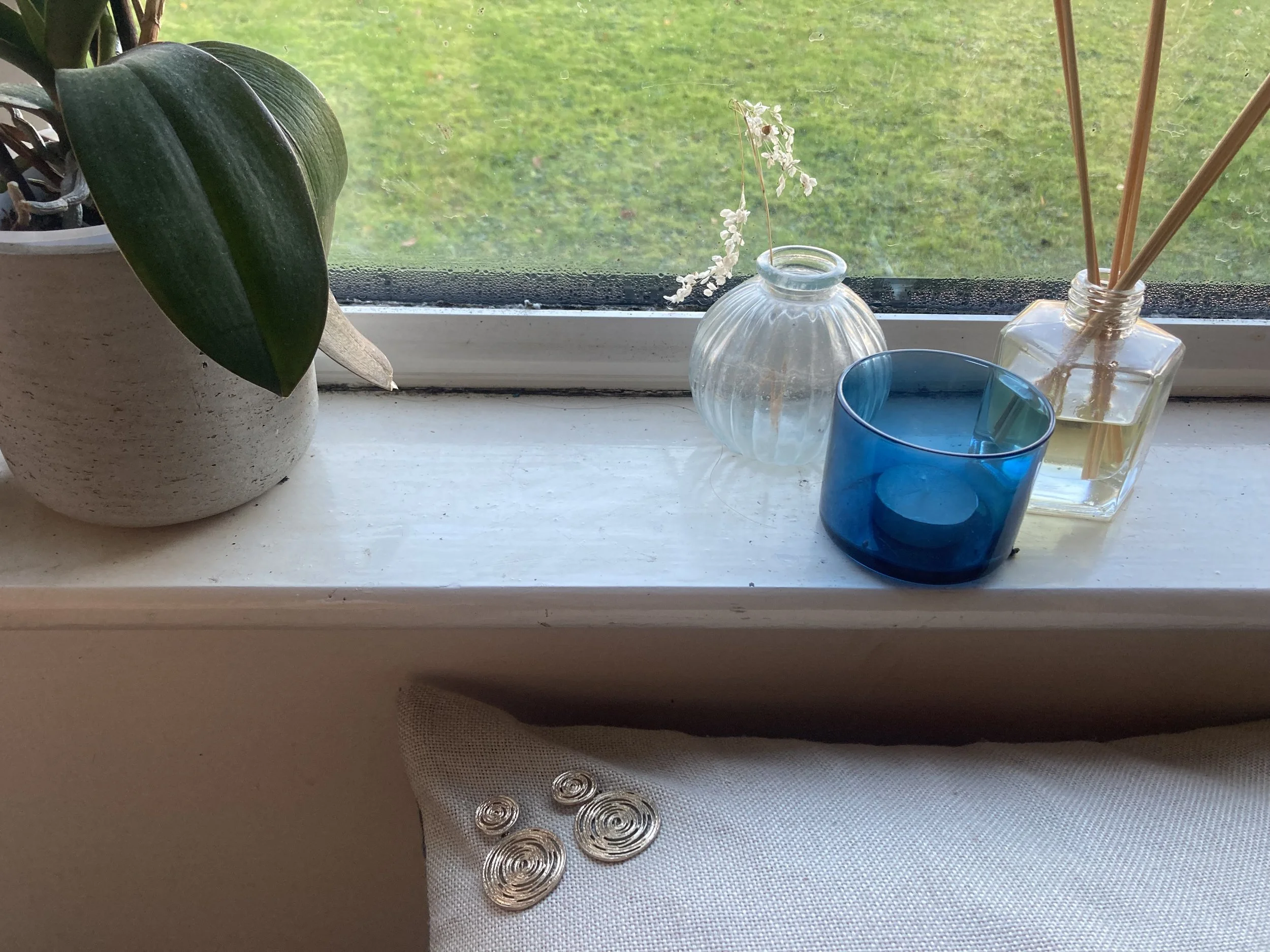
The window: First layer+ Anchor layer.
First layer (natural) : fresh air, light, and the outdoor environment entering the space.
Anchor layer: diffuser, candle, and vase are objects that stay in place and quietly support the atmosphere over time. Nothing needs to be active all the time.
2. The Anchor layer: what stays
Some scents don’t pass, they stay.
They come from materials and objects that live in the home and don’t move much: shelves, corners, side tables.
This includes natural materials like books, paper, plants, fabrics or wood, as well as added elements like a candle or a diffuser that belongs to one place and is used lightly.
These scents aren’t meant to announce themselves.
They quietly give a space its identity.
Here, consistency matters more than intensity.
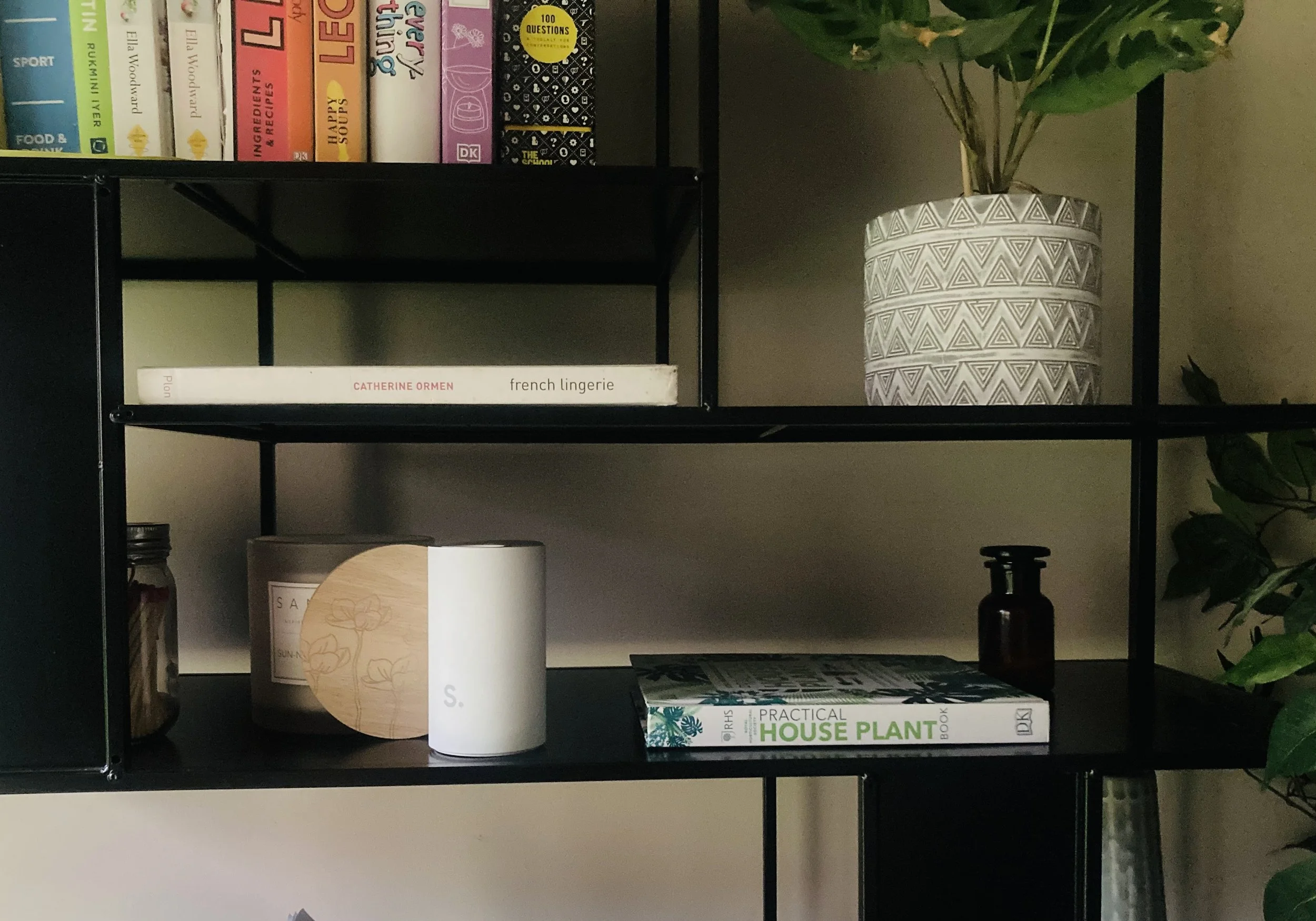
The Shelf: Anchor layer.
Books, paper, plants, shelf materials, diffuser and candle are elements that stay and give the space a consistent scent identity, whether natural or added.
3. The Ritual layer
The final layer isn’t really about rooms. It’s about moments.
Lighting a candle in the evening.
Making tea.
Pausing for a few minutes.
Writing a few words in a journal.
This is where scent becomes intentional.
Not to change the space, and not to perform a mood but to mark a transition, gently.
Journaling belongs here, not to analyse scent, but to notice what’s already present and how it shifts.
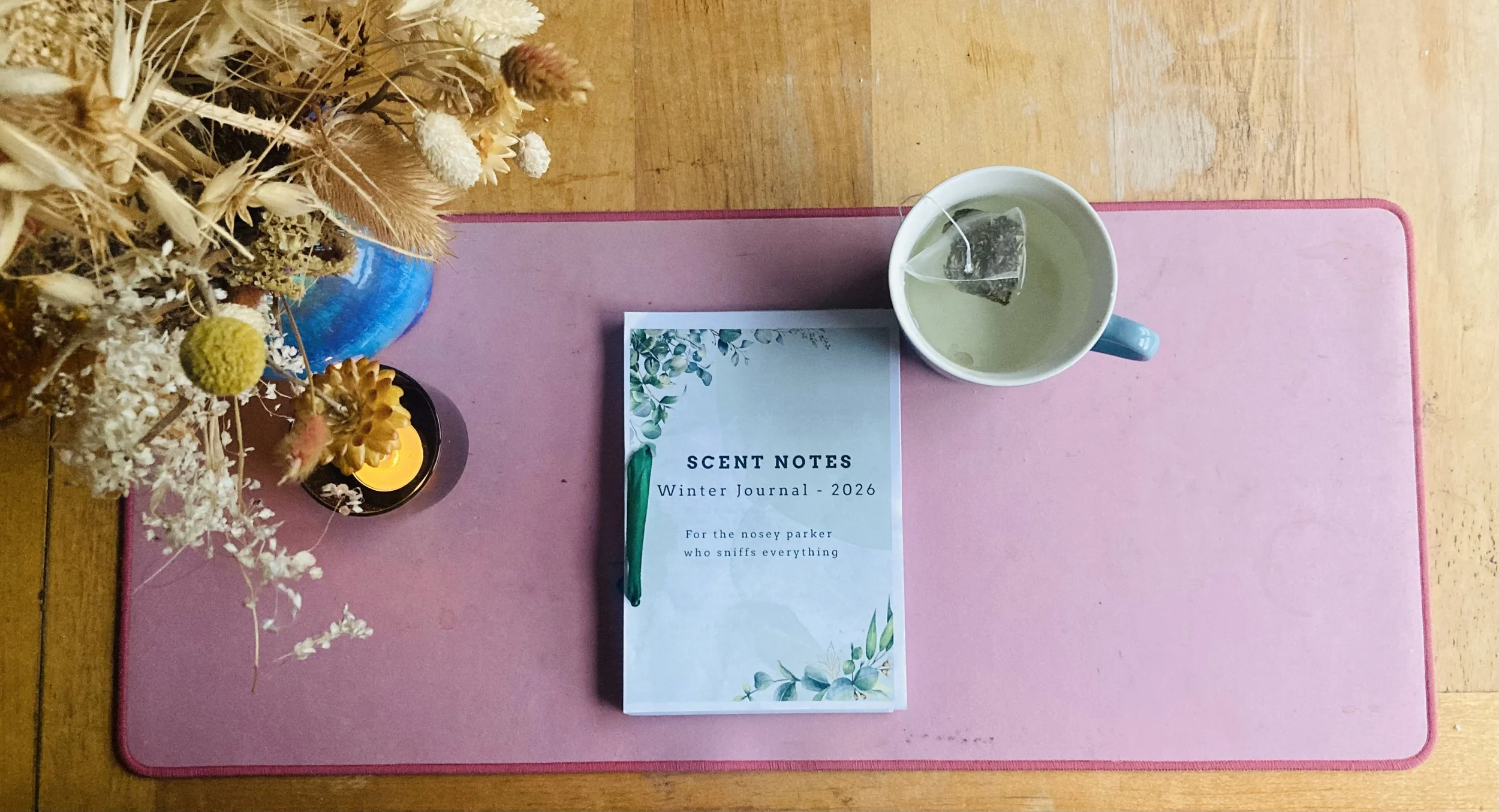
The Journal : Ritual layer.
Objects like a candle or a teabag aren’t a layer on their own. They become ritual when you choose to use them intentionally.
Living with scent
Scent stacking isn’t about control or performance.
It’s about the difference between scent happening to you and scent being something you choose, lightly.
Scent doesn’t need to fill every room. It doesn’t need to be constant.
It’s there to accompany your day , not to lead it.