Better Sleep starts before bed: 3 Evening Signals that help your body switch off
Better sleep starts before bed; it begins earlier, when the home starts behaving differently.
Most of us try to fall asleep while everything around us still feels like 3pm. The lights are the same, the laptop is open, the energy hasn’t shifted. Then we wonder why our brain refuses to cooperate.
For me, the evening works better when the room clearly signals we’re done for the day.
Here are three small shifts that make that transition feel real.
1. The Visual Shift: Contrast
The body reads contrast before the mind does. If the room still looks like work mode your nervous system will believe it.
When the day winds down, the space needs to soften just enough to feel different.
Lower the lamps instead of switching everything off at once. It feels intentional, not abrupt,
Clear surface. A quiet room is easier to rest i than one that still looks busy.
Repeat the same cues each evening. Repetition is what turns ambiance into signal.
It is about teaching your body what evening means.

2. The Scent signal : The Room Infusion
Long before electric diffusers, scent lived in bowls and herb dishes near beds.
So I made a Room Infusion of Chamomile and Lime Flower. I find Lavender can be overused and, depending on the source, sometimes too sharp.
This infusion is a living scent that rises gently with the steam and then fades.
What you need
Chamomile 3 tbsp
Lime Flower : 1 tbsp
Hot water
1 bowl
What I do
Place 3 tablespoons of Chamomile and 1 of Lime Flower in a bowl.
Pour hot (not boiling) water over them. This isn't a tea to drink; it’s an infusion for the air.
Set the bowl in the bedroom for 20-30 minutes before sleep.
How I use it
The room infusion is there to mark the shift. When the water cools that’s the cue. The day is closed.
After that, the herbs go to compost. They have done their part.
It’s a small thing but small repeated things are surprisingly powerful.
Sounds can help the transition too.
I am not taking about meditation tracks or deep sleep frequencies but music that moves at a slower pace that the day did.
Warm instrumental tracks with a soft groove help lower the energy without demanding attention. They don’t pull you inward; they simply ease the space out of work mode. It is more about unwinding before sleeping.
I’ve shared my current evening playlist if you would like a starting point.
🎧 Listen to the Lower the Lights playlist
3. The Mind signal: The Scribble or the Offload
Even in a calm room, the mind can still replaying the day. That’s usually the real reason sleep takes longer than it should.
There are simple ways to offload the noise so it doesn’t follow you into bed.
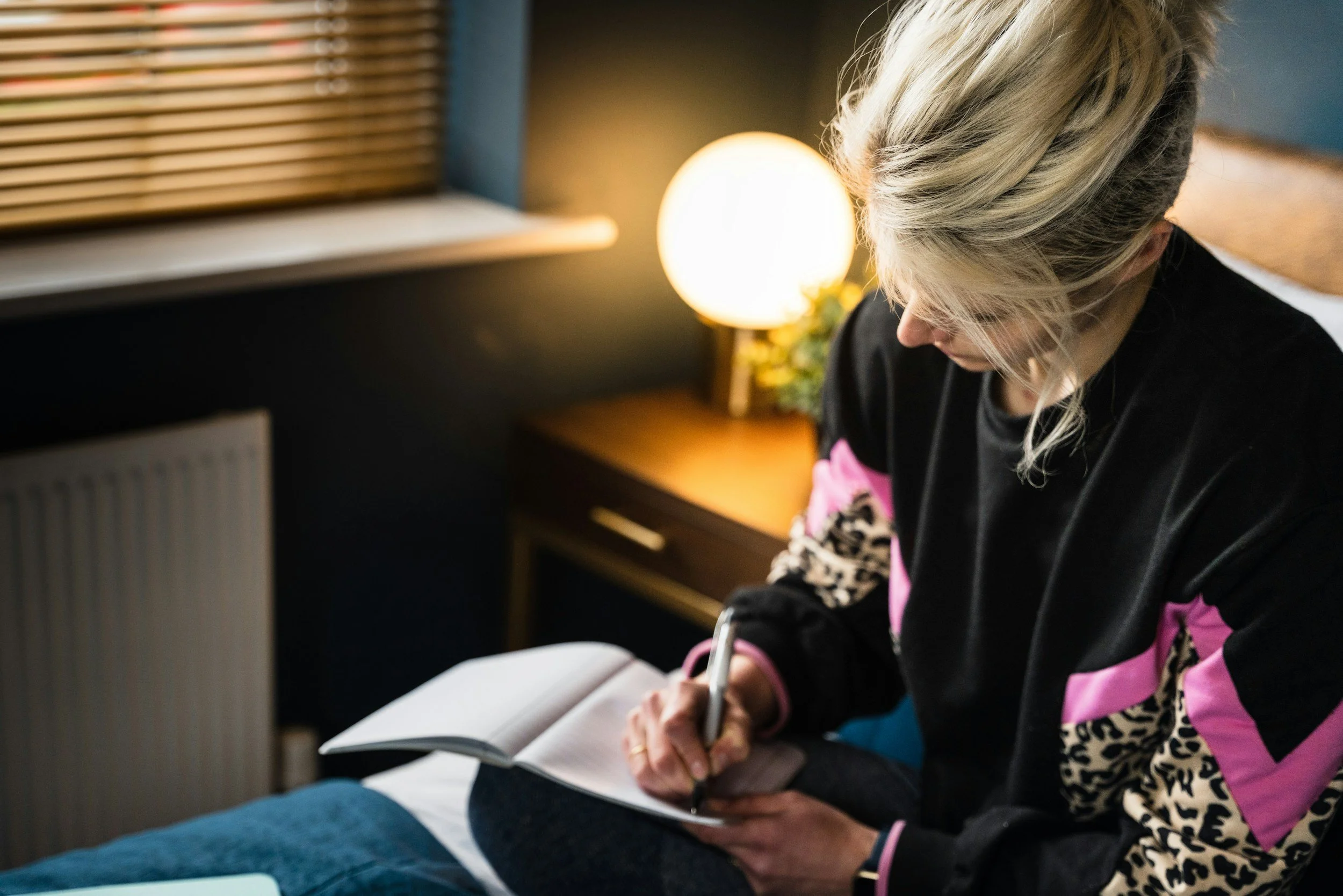
The Scribble:
Journaling is a often recommended for reflection but reflection can sometimes keep us inside the story of the day : analysing it, replaying it, extending it.
A neutral prompt works differently. It shifts the topic. The mind understands that the conversation about the day is over.
Instead of asking big questions, it might focus on something small and sensory. What did I notice? What felt different? What did I overlook?
That subtle redirection is what helps the brain exit the daily loop .
That philosophy of using small sensory prompts as an exit is what shaped the Scent Note journal.
The Voice Offload:
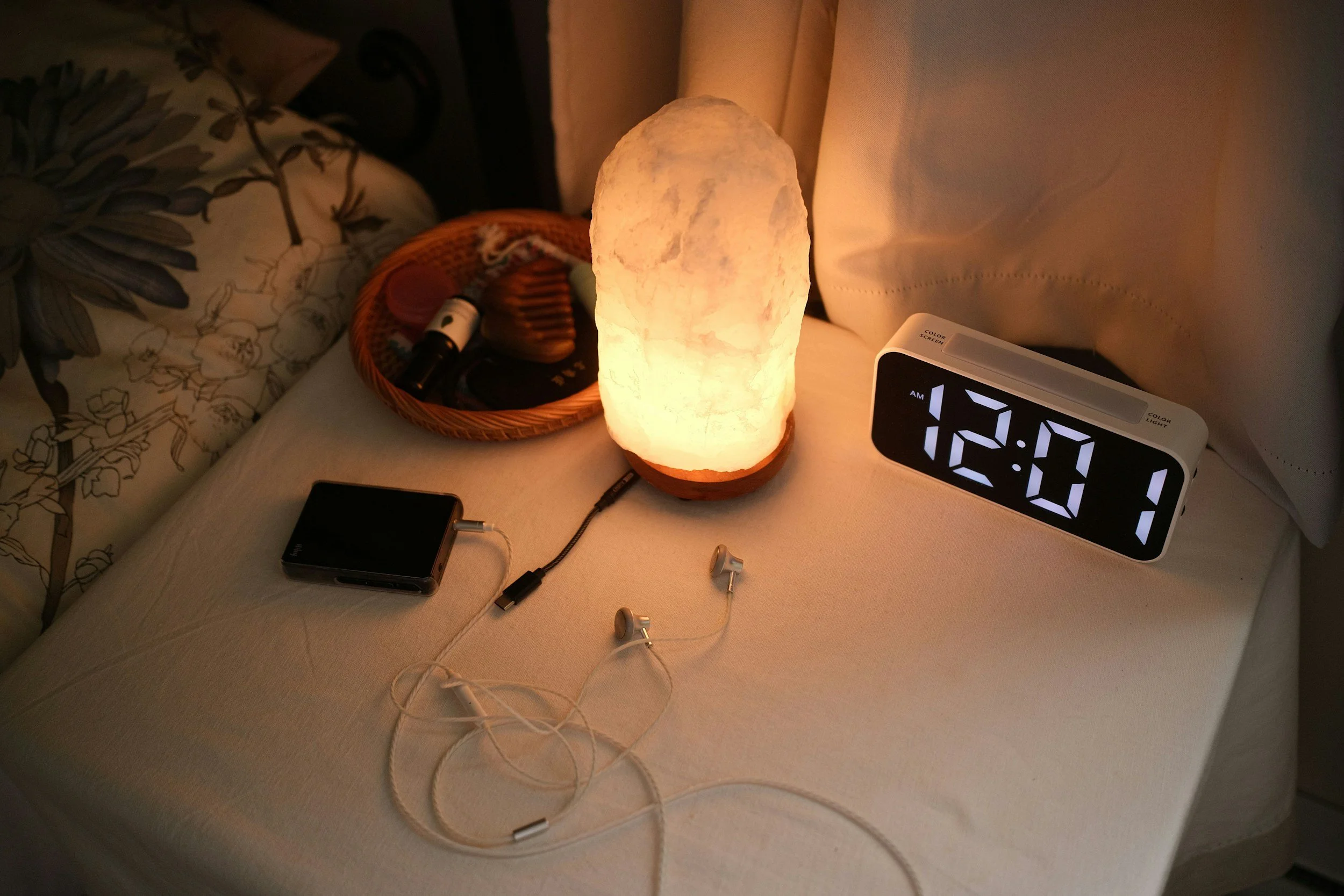
On evenings, when writing feels like too much, a simple voice note can work just as well, ideally on a separate recorder so the phone stays out of the room.
Final thought
A room only becomes a signal when it’s consistent. By keeping the work and the scrolling outside the door, the scent of the room infusion becomes the only thing that belongs to your night.
This isn’t about changing your life in one go. It’s just about stacking these three moments together: lower the lights, start the infusion, and capture your thoughts. Doing them in the same order helps the body recognize the sequence as a sign that it’s finally safe to rest.
The real question isn’t: what scent should I use? It’s How my home mark the end of the day?