Home Fragrance Claims: What’s Often Left Unsaid
Standing in front of the home fragrance aisle, a lot of products seem to promise the same thing: a room that smells better but they do not work in the same way.
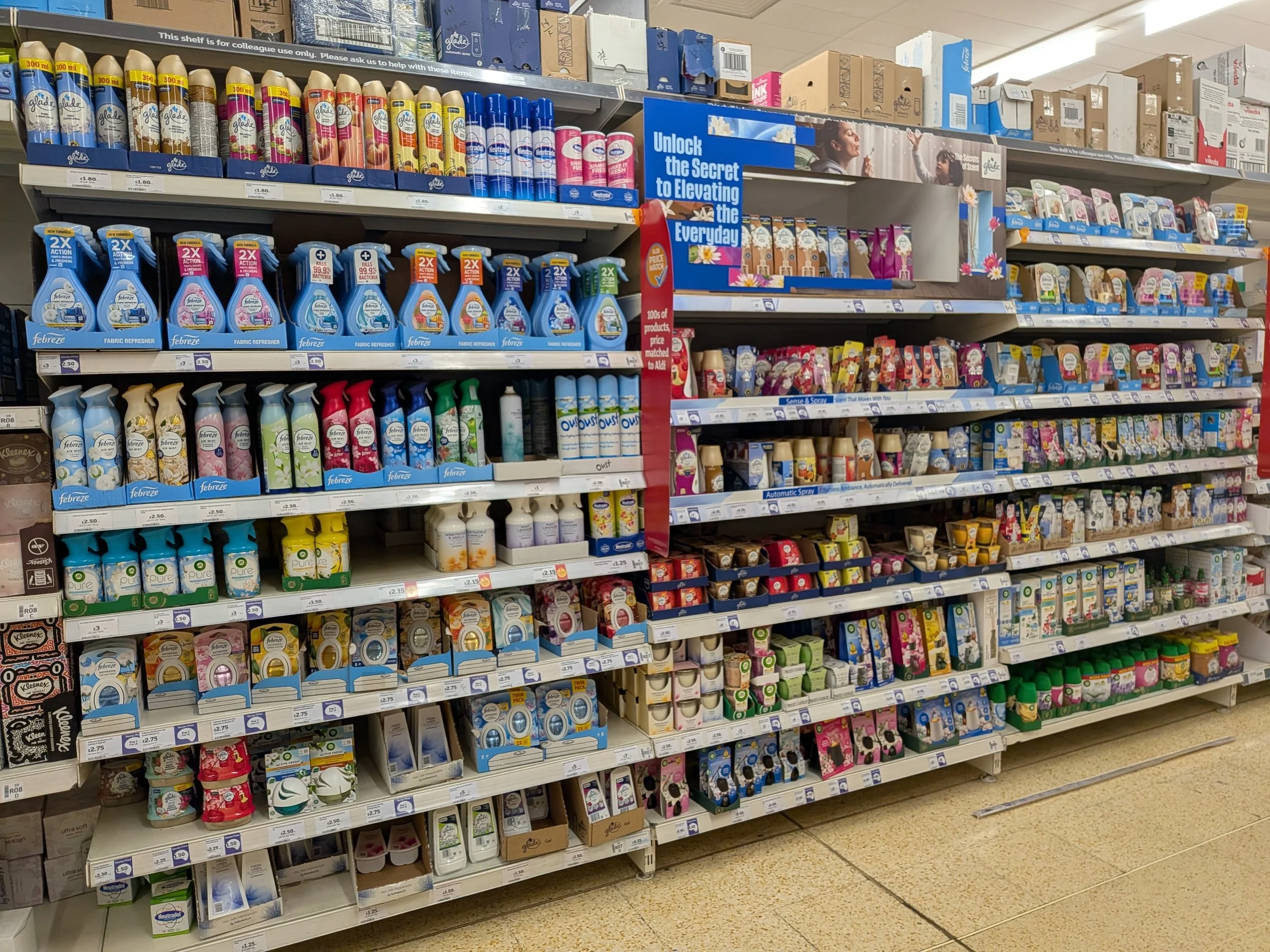
Air fresheners, plug-ins, sprays and diffusers-all grouped under one promise: a better smelling room
Some products are designed to release scent continuously, like plug-ins and automatic sprays. Others work more quietly, like reed diffusers, candles or incense.
That matters, because we often compare them as if they belong to one category and do one job. They don’t.
A plug-in is a system.
A reed diffuser is a passive object.
A spray is an instant reset.
Same broad category, different mechanism.
That is why the claims on the front can sound similar, while the experience at home is completely different.
Long lasting Claims
At first glance, those numbers make it sound as if plug-ins simply perform better, but they are not measuring the same kind of thing.

A reed diffuser might promise 6 to 8 weeks…
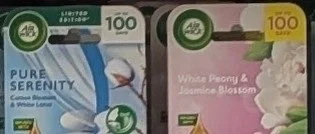
….while a plug-in promises 100 days or more
A reed diffuser works through passive evaporation. The liquid rises through the reeds and slowly diffuses into the air. As the liquid drops, the scent softens.
A plug-in is built to keep releasing fragrance continuously. It is not waiting for air circulation or passive evaporation in the same way. It is engineered to keep going.
So the number on the front is not just about “how long scent lasts”. It reflects the system behind it.
A reed diffuser lasting five to 8 weeks and a plug-in lasting 90 to 120 days are not equivalent promises. They belong to different fragrance formats, with different expectations built in.
Essential Oils and Mood Claims
This is the part that shapes perception quickly.
“With essential oils”is a claim that often signal naturalness, wellbeing and a more elevated experience,
The mood language on pack like “Zen”, “Relax”, “Happiness”, “Serenity”, tells you how the product wants to feel before you even smell anything.
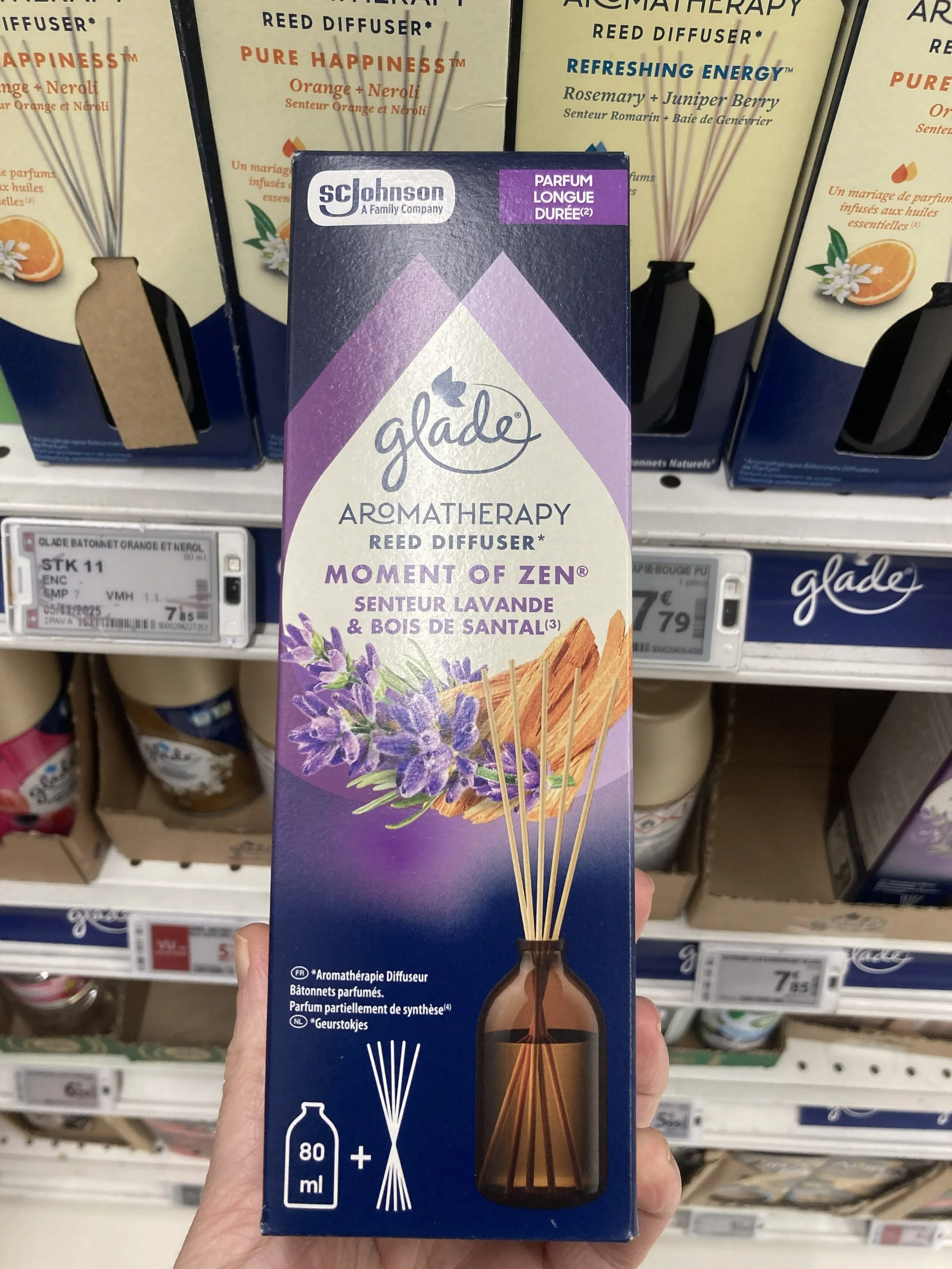
Mood first: the feeling is sold before we know what’s inside
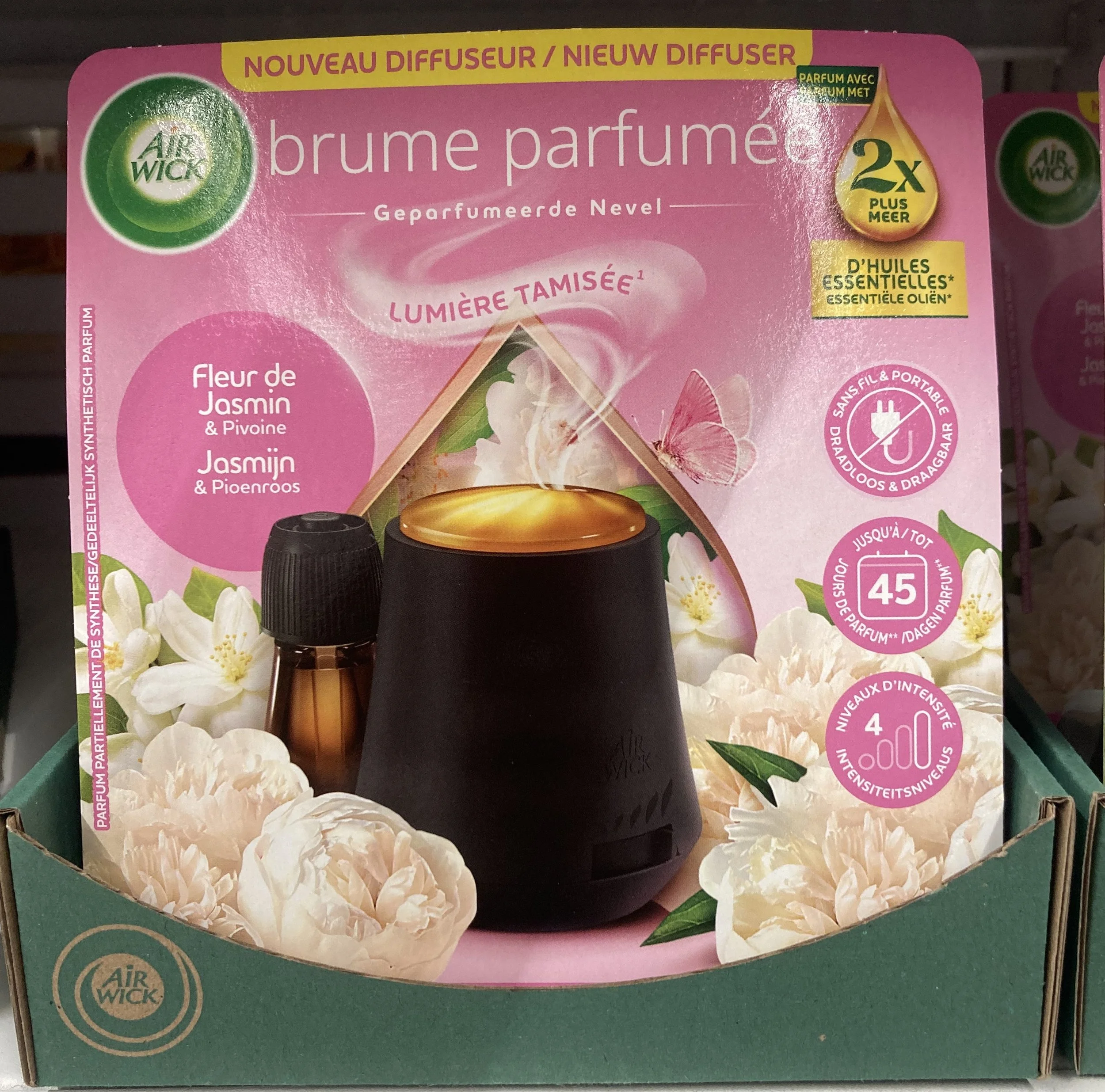
The scent is easy to picture and the essential oils claim adds another layer to it
These claims do a lot of work on the shelf but do not actually tell you much about performance.
The claim “with essential oils” indicates presence, but it does not tell you how much is inside or whether the scent comes from pure essential oils, fragrance oils or a blend of both.
Mood words set an expectation quickly. They are part of the positioning, not a guarantee of the experience felt.
So here, these claims shape expectation much faster than they explain function and it is easy to buy into that without really noticing.
What isn’t shown on the pack
This is the part I find most interesting, because it is also the part that gets overlooked.
The front of the pack will usually tell you the fragrance name, a mood, maybe a duration claim, maybe “with essential oils”.
What it rarely tells you clearly is:
how concentrated the fragrance is
what base or solvent is being used
what kind of reeds are inside
whether the scent is passive, boosted or continuously released
Those are the things that decide how a product actually behaves in a room.
If a diffuser fades too quickly, feels too strong, or smells different from what you expected, the explanation is often what’s barely mentioned on the packaging.
The shelf context is part of the story
This is the quieter layer, but it is worth noticing.
In one aisle, home fragrance sits within the air freshener section with odour sprays and plug-ins ( as shown above) nearby cleaning products. There, it feels functional in terms of freshness, convenience or performance.
In another part of the store, home fragrance appears with candles, seasonal home accessories and gift-style packaging. I also noticed that once fragrance moves ito the home section, the language often says less about duration and more about atmosphere.
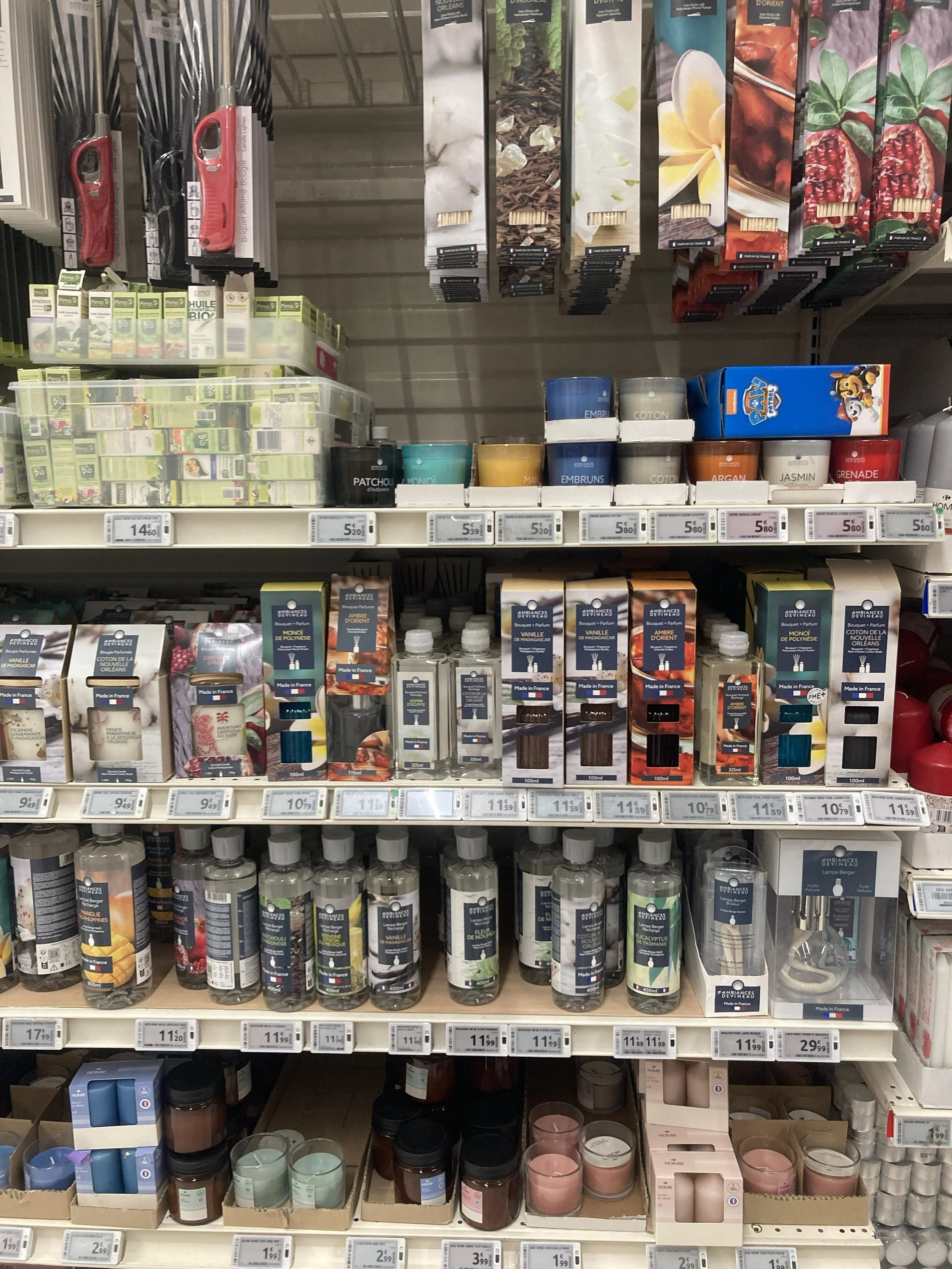
France: within the wider home fragrance offer, Made in Fane is more visually prominent than performance cues such as duration.
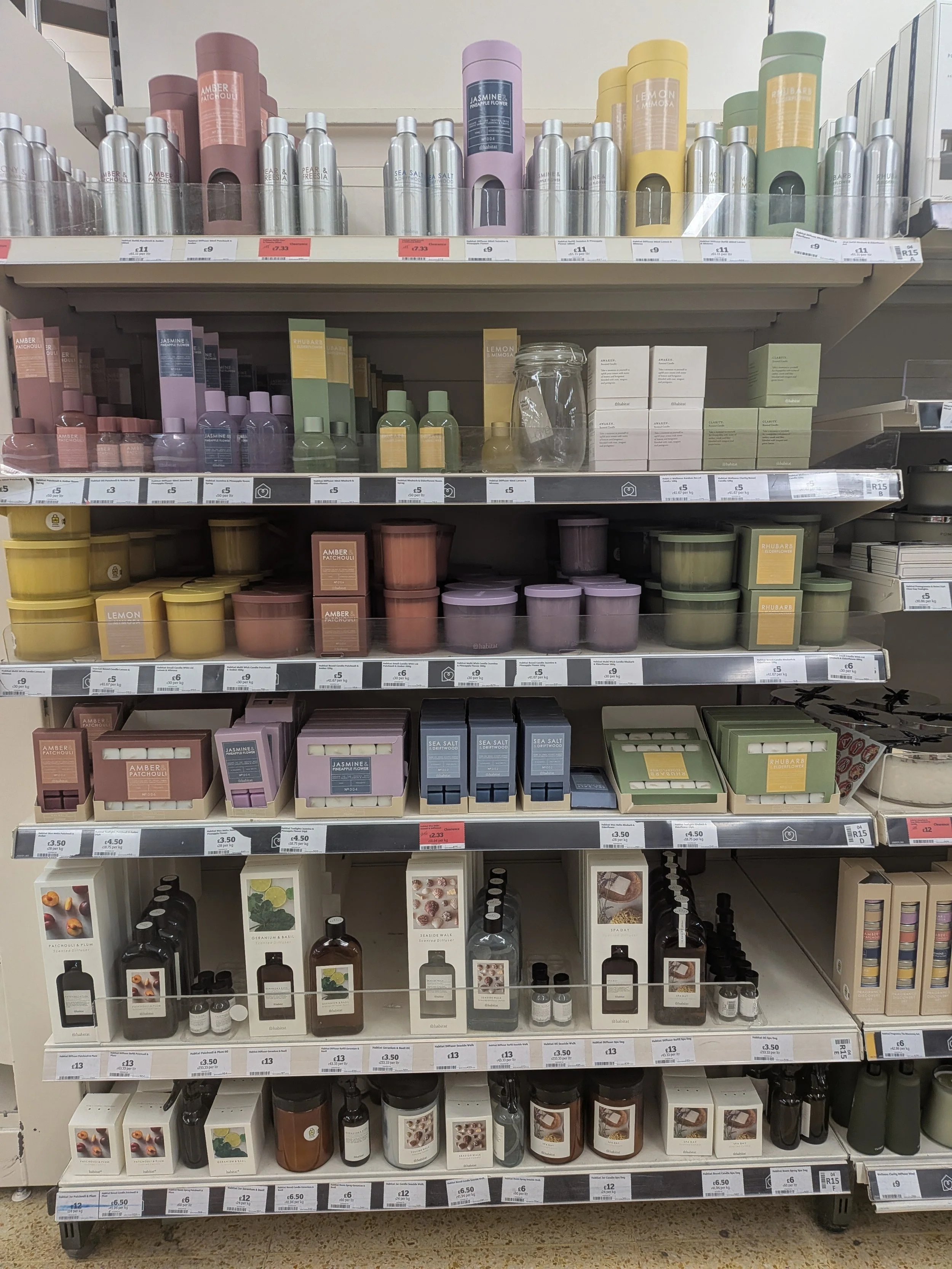
UK: within the home fragrance shelf, atmosphere and visual mood come through more strongly than performance-led language
Same broad category, different framing.
That changes how we read the product before we even look at the label.
In the air freshener aisle, we expect it to solve a problem.
In the home section, we expect it to create a feeling.
So here shelf context sells part of the story too.
The product is not just sold by what is printed on the pack. It is also sold by where it sits, what surrounds it, and what kind of job that aisle suggests it should do.
Final thought
I’m using supermarket shelves here as a benchmark, mainly from France and the UK. The products and wordings may vary from one market to another but the broader pattern is familiar in the category: strong cues front of pack and much less clarity on what’s actually inside.
That is part of why I keep writing about home fragrance. Once you understand how scent is being sold, it becomes much easier to decide what is worth buying, what suits your space, and what you might prefer to create yourself.
And if you want to start simply , I also shared a post on how to make your own room spray without chemicals. Click below:
